Breakroom Coffee and Beverage Options: What’s Best for Your Office?

Brewed or Bottled? The Ultimate Breakroom

coffee or soda
coffee or soda

The modern workplace breakroom has evolved far beyond a simple drip-coffee pot and a dusty cooler of soda. Today, employees expect choice, convenience, and quality. Whether you’re planning a refresh for your company’s breakroom or just exploring how to optimize beverage offerings, here’s a guide to comparing your breakroom coffee and beverage options including tradeoffs, best practices, and smart additions.

(If you want to see how some of these options are implemented in real offices, check our case studies at Delio Vending & Coffee Services.)

Interestingly, the same trend toward premium drink options can be seen in places like a casino or even an online casino‘s employee support center, where high-traffic environments demand fast, reliable and appealing beverage choices.


What Breakroom Beverages Are on the Table?

Before diving into comparisons, here’s a sampling of beverage options commonly seen in breakrooms:

  • Traditional hot drip coffee (bulk brew)

  • Single-serve pod or capsule machines

  • Espresso / cappuccino / latte / specialty coffee machines

  • Cold brew or nitro coffee taps

  • Iced coffee / iced latte dispensers

  • Hot tea, herbal infusions, matcha

  • Filtered cold water (still and/or sparkling)

  • Vitamin-infused or functional waters

  • Fresh-juice blends or cold-pressed juices

  • Sparkling water / flavored seltzers

  • Health-conscious low-sugar drinks, coconut water, electrolyte drinks

In recent years, trends indicate growing demand for cold and functional drinks (think nitro cold brew, infused waters, kombucha) as employees favor refreshing and wellness-forward choices.


Side-by-Side Comparison: Coffee vs. Other Beverages

Here’s a breakdown comparing key beverage categories across several dimensions:

Beverage Type

Pros

Cons / Challenges

Best Use Cases

Bulk hot drip coffee

Economical for large teams; simple to maintain

Less flexibility in strength/flavor; can go stale if sitting long

For offices with many regular coffee drinkers and consistent high demand

Single-serve pods / capsules

Wide choice, minimal waste, quick

Cost per cup higher; waste (pods)

Mixed-need offices or where customization is appreciated

Espresso / specialty machines

Offers lattes, cappuccinos, mochas or premium feel

Higher cost, more frequent maintenance

For offices where premium coffee is a perk

Cold brew / nitro tap systems

On-trend, refreshing, perceived premium

Higher upfront cost; may require refrigeration and servicing

Warm climates, modern offices, employee retention tool

Tea / herbal infusions

Healthy alternative, wide flavor variety

Requires hot water station; some lower demand

Ideal to complement coffee offerings

Filtered water (still / sparkling)

Essential, healthy, low barrier

Need regular filter replacement; carbonator maintenance

Core hydration station

Functional / infused waters & seltzers

Wellness appeal, low sugar

Shorter shelf lives; higher cost

To satisfy health-conscious employees

Fresh juices / cold-press blends

Premium, flavorful

Cost, spoilage risk, requires refrigeration

For high-end offices or premium client spaces


What to Consider When Choosing

When selecting which beverage options to include in your breakroom, consider:

  • Employee preferences & demographics – Survey or test sample offerings to know what your staff really drinks.

  • Upfront vs ongoing cost – A cold brew tap may be impressive, but if it’s underutilized, it might not justify the costs.

  • Maintenance & reliability – More complex machines require frequent cleaning, service, or more wear parts.

  • Footprint & infrastructure – Some systems demand plumbing, drainage, electrical capacity, or refrigerated units.

  • Stocking, supply chain & restocking logistics – Pods, bottled drinks, juice blends all require supply.

  • Waste, sustainability & branding – Offices increasingly factor in compostable cups, recyclable bottles, or zero-waste systems.

  • Health & wellness trends – Lower-sugar drinks, infused waters, plant-based milk options are in demand.

  • Best healthy beverages for office breakrooms


Tips to Optimize a Mixed Beverage Strategy

Instead of picking one type, many offices succeed by layering offerings. Here are tips:

  • Offer a “coffee core”, such as bulk drip or single-serve, supplemented with cold brew taps or espresso machines

  • Position a hydration station (filtered still + sparkling water) centrally to encourage daily use

  • Include a tea bar / herbal station—hot water spigot + assortment of high-quality teas

  • Rotate seasonal or flavored drink options (e.g. spring citrus infused water, summer iced teas)

  • Use judicious portioning & shelf life — small batches of juices or infusions reduce spoilage

  • Monitor usage data & feedback — track which drinks run out first, and drop underperformers

  • Lean into branding and aesthetics — quality presentation (e.g. sleek tap towers, glass carafes) can elevate perception


Benefits of Upgraded Beverage Options

single serve pod

Here’s why investing in a better beverage mix pays off:

  • Employee satisfaction & retention — premium drinks feel like perks

  • Reduced downtime — fewer trips outside the office to cafe run

  • Wellness & productivity — hydration and better drink choices support cognitive focus

  • Culture & image — a sophisticated breakroom can be part of employer branding

  • ROI opportunity — companies often see over 150% ROI from upgraded breakrooms.


FAQs About Breakroom Coffee & Beverages

Q: Do employees actually prefer cold brew or nitro over hot coffee?
A: Many do. Modern workplace beverage trends show that cold coffee formats are no longer novelty as they’re becoming baseline expectations. 

Q: What’s more cost-effective:  bulk brew or single-serve pods?
A: Bulk brew has lower cost per cup at scale, but offers less flexibility. Single-serve gives choice and freshness but higher per-cup cost. The right answer often is a hybrid approach.

Q: How do you manage spoilage for fresh juices or infused drinks?
A: Keep small batches, use chilled display, label with dates, and monitor consumption closely to avoid waste.

Q: Is sparkling water as hydrating as still water?
A: Yes. Carbonation doesn’t significantly reduce hydration. Many people drink more water if it’s more exciting (e.g. fizzy). 

Q: What maintenance concerns should I plan for?
A: Clean machines regularly, replace filters, service CO₂ or refrigeration systems, schedule professional maintenance, and keep spare parts on hand.

Q: How can I pilot a new drink option without full rollout risk?
A: Start with a pop-up “trial zone,” offer free tasting days, or rotate a “drink of the month” to test acceptance.


Conclusion

Choosing breakroom beverage options is a balancing act between cost, maintenance, flexibility, and employee delight. A smart mix usually wins, a reliable “core” coffee offering, great water station, and a few premium or trending beverages (cold brew, infused waters, sparkling options).

If you’d like help designing or sourcing equipment, or want to see inspiring real-world setups, check out Delio Vending & Coffee Services to get more real life experience information.

Office Coffee Service in Dallas–Fort Worth | Corporate Coffee

Office Coffee Service in Dallas–Fort Worth: Café-Level Coffee for Every Workplace

Coffee at work is no longer a perk, it’s core to focus, morale, and hospitality. With the right office coffee service, your break room runs like a café: consistent quality, zero hassle. That’s why so many leaders are partnering with coffee vendors for offices instead of juggling supplies themselves. The best office coffee service feels like a café brought in-house: curated selections, smart equipment, and dependable support that runs on autopilot. If you’ve ever wrestled with an empty creamer, a jammed brewer, or a last-minute visitor with no espresso option, you know why a professional coffee service for businesses is a smart move.

Why companies are upgrading break rooms

  • Improve productivity and reduce time lost to coffee runs.
  • Elevate hospitality for clients, candidates, and VIP meetings.
  • Standardize quality across floors and sites with consistent equipment.
  • Centralize costs and reduce waste through usage tracking.
  • Offer better variety (espresso, drip, cold brew, tea, dairy-free and sugar-free).

    coffee break at the breakroom
    coffee break at the breakroom

What a modern corporate coffee service includes

  •  Equipment options: single-cup brewers, high-capacity drip systems, automated espresso machines, and nitro or still cold-brew setups.
  • Consumables: whole bean, ground, single-serve, and fraction packs; creamers (dairy and alt-dairy), syrups, sugars, cups, lids, stirrers, filters.
  • Maintenance: scheduled cleaning, descaling, filter changes, and parts replacement.
  • Support: quick-response service calls, loaner machines when needed, and proactive route tech visits.

Matching equipment to your workflow

A small suite may thrive with a compact single-cup brewer, while a busy floor needs a high-capacity thermal system that keeps coffee hot without scorching. If you host leadership meetings or demos, an automated espresso machine can elevate the experience with one-touch drinks. The right coffee service for office locations starts by assessing headcount, shift patterns, and space constraints, then recommending a stack that balances speed, taste, and ease of cleaning.

Cost control without the chaos

Buying retail looks cheaper until waste piles up and favorites stock out. With business coffee services, you get consolidated invoices, predictable pricing, and consumption data that shows what people actually drink. That insight prevents overordering and guides seasonal rotations. When commercial coffee companies visit weekly, they balance your mix so popular items never run out and replace small parts before they become big problems.

Quality, sustainability, and local flavor

Your program can do good and taste great. Ask about roaster relationships, bean freshness, and ethical sourcing (Fair Trade, Rainforest Alliance). Consider:

coffee beans, ground beans


  • Roast variety: light, medium, and dark to satisfy most palates.
  • Rotations: “roaster of the month” or seasonal blends to keep things fresh.
  • Education: brew cards near the machine and short staff demos to reduce waste.

In Dallas–Fort Worth, the food scene is vibrant. An office coffee service in Dallas Fort Worth should know which local roasts perform best on your machines and how to preserve their flavor profile with the right grind, dose, and water treatment.

Micro-markets and vending programs are often integrated into company wellness and convenience initiatives. Email deliverability plays a role in internal communications, promotions, and loyalty programs, ensuring employees are aware of new offerings, seasonal rotations, and reward systems tied to breakroom engagement. A well-connected digital communication plan keeps your workforce informed and excited about every cup, snack, or perk available.


Water and filtration: the hidden hero

Flavor and equipment health depend on water. A serious corporate coffee service includes filtration matched to your local water and machine type. This reduces scale, preserves boilers, and keeps delicate notes intact—especially in lighter roasts and espresso. If you also want still or sparkling water dispensers, choose a partner who can integrate them under the same service umbrella to simplify support.


How to compare commercial coffee companies

  • Scalability: Can they add brewers and routes as you grow or open new offices.
  • Choice: Do they offer recognized brands and local roasters, not just private label.
  • Service level: Clear SLAs, fast response, and techs who carry parts for same-visit fixes.
  • Data & billing: Usage reports, consolidated invoices, and transparent pricing.
  • Training: Quick onboarding for admins and simple guides for everyday brewing.

DFW use cases and menu ideas

Warehouses might need rugged brewers, large urns, and overnight support. Hospitals value quiet operations and reliable night shift service. Creative studios often want espresso, oat or almond milk, and cold brew on tap. Mix and match:

  • Drip + single-cup for speed and variety.
  • Espresso + premium tea for meetings and guests.
  • Cold brew + flavored syrups for warm months.
  • Dairy-free creamers and low-sugar options for wellness initiatives.

Quick starter checklist

  • Headcount by area and peak times.
  • Current pain points (stock outs, mess, slow machines).
  • Desired beverages (espresso, drip, cold brew, tea).
  • Space, water, and power availability.
  • Budget range and approval process.
  • Shortlist two or three coffee vendors for offices for walk-throughs and proposals.

FAQs: Office Coffee Service

office coffee service

1) What’s typically included in an office coffee service?
Most programs include equipment (brewers/espresso), coffee and tea supplies, cups and condiments, water filtration, preventative maintenance, and on-call repairs. Many corporate coffee service providers also offer launch tastings and simple brew guides to boost adoption.

2) How does pricing work for business coffee services?
You’ll usually see a monthly equipment fee (or equipment provided at no cost with a supply commitment) plus recurring charges for coffee and consumables. Commercial coffee companies can also quote per-cup estimates based on your headcount and drink mix so you forecast accurately.

3) How much coffee should we order for our headcount?
A common starting point is 1.5–2 cups per person per workday for drip or single-cup programs, and 0.3–0.5 espresso beverages per person where machines are available. Your vendor will right-size orders after the first month using actual usage data. For added information, please check out National Coffee Data Trends.

4) Do we need a water line or special plumbing?
Many brewers can run on internal tanks, but plumb-in units with filtration give better taste and faster throughput. Your coffee office service provider will confirm water and power requirements during the site walk-through.

5) Can we feature local DFW roasters and still keep costs in check?
Yes. A balanced menu often pairs a house medium roast for everyday brewing with a rotating local roaster for variety. This keeps per-cup costs steady while showcasing regional offerings—ideal for an office coffee service in Dallas Fort Worth.

6) How often is maintenance performed and who cleans the machines?
Vendors handle scheduled deep cleaning, descaling, and filter changes. Daily wipe-downs and emptying waste bins are usually handled by onsite staff. Clear cleaning checklists near the machine help keep quality consistent between route visits.

7) Can we add cold brew, hot chocolate, or specialty syrups?
Absolutely. Coffee service for office programs can bundle cold-brew kegs or concentrates, premium cocoa, matcha, and flavored syrups. If your culture leans seasonal, ask for rotating recipes and simple one-page brew cards.

8) What if our usage spikes during events or hiring waves?
Commercial coffee companies can stage extra carafes, swap in higher-capacity brewers, or schedule supplemental deliveries. Share your hiring plan or big meeting calendar so they can adjust proactively.

9) How do we measure ROI beyond morale?
Look at fewer off-site coffee trips, improved meeting readiness, reduced waste from retail buying, and time saved by facilities. Many providers share dashboards that align usage with cost and service tickets.


Follow Through

office coffee vending machine service

When you’re ready, invite two or three providers to propose equipment, menu, service cadence, and pricing. Ask for references from similar industries and, if possible, tour a client site. With the right partner, your office coffee service turns the break room into a daily advantage, better focus, happier teams, and a consistent experience for every guest. Whether you need broad coffee service for businesses, a focused coffee service for office floors, or a scalable corporate coffee service across multiple sites, experienced commercial coffee companies can make premium coffee simple. And if you operate here in North Texas, a seasoned office coffee service in Dallas Fort Worth will know exactly how to keep your people fueled, cup after cup.


Small Office Coffee Station Ideas

Top 3 Small Office Coffee Station Ideas for your Breakrooms

When it comes to planning small office coffee station ideas, space is often the biggest limitation. Most offices or breakrooms do not have the luxury of dedicating an entire kitchen to coffee equipment, yet employees still expect fresh, consistent, and fast coffee. After more than 15 years in the office coffee service industry, I have learned that the key to success in a small footprint is choosing the right machine for your needs.

Before we even get into machines, let’s establish one important principle: the best water source for any office coffee machine is always in-line plumbed water with a filtration system attached. It is not just about taste, though filtered water dramatically improves coffee flavor. It is also about machine longevity. Poor water quality is the number one cause of premature machine breakdowns. A reliable filtration system keeps your machine running smoothly while ensuring every cup meets consistent quality standards.

With that baseline set, let’s dive into three categories of coffee solutions that work perfectly for small office setups: Volume, Pricing, and Premium.

1. Volume: Serving Coffee Fast and in High Quantities

If your office or breakroom needs to keep a large group caffeinated, think 30 or more employees or high-traffic environments like warehouses, then volume should be your top priority. The solution is typically airpot systems or concentrated brewers that can push out coffee quickly without long wait times.

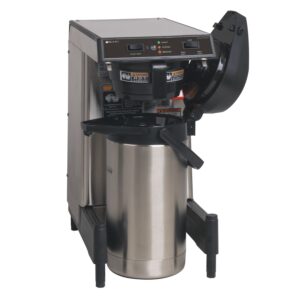
Bunn smartwave airpot coffee brewer for small but volume office coffee
  • The Bunn SmartWAVE 15-S-APS is a staple in the industry. Bunn has been around for decades, and their airpot systems are proven for speed and reliability. The SmartWAVE 15-S-APS is designed to brew directly into an airpot, allowing you to brew multiple pots in advance and set them out for quick grab-and-go service. Perfect for high-traffic offices or environments where employees do not have time to wait.

    concentrated coffee machine
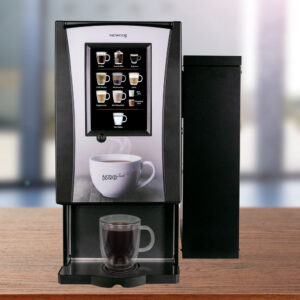
    Fast, fresh, and reliable — the Newco Bistro Touch delivers café-style coffee in under 10 seconds.
  • For an even better all-in-one volume solution, I recommend the Newco Bistro Touch Concentrated Liquid Coffee. This machine is a game-changer in the volume space because it combines speed with variety. It comes with two powder hoppers (3 lbs. for milk and 8 lbs. for chocolate), making it more versatile than a traditional airpot brewer. Each cup takes less than 10 seconds to brew, meaning you can serve a rush of employees in minutes.

Why I recommend Newco for volume: It reduces the wait, lowers labor time since there is no need to constantly brew new pots, and offers more flexibility in drink options including coffee, milk, and hot chocolate. In environments where speed is everything, this is the clear winner.

2. Pricing: Affordable Small Office Coffee Station Ideas

Not every office has the budget or demand for high-capacity brewers. Sometimes, all you need is a reliable and affordable option that still delivers quality without breaking the bank. For smaller teams of 10 to 30 employees, single-serve coffee brewers are the gold standard.

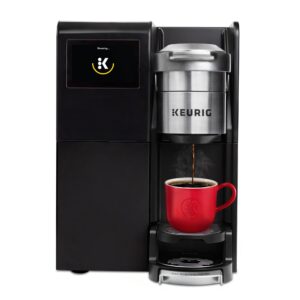
Commercial Keurig K3500 single-serve coffee machine in an office breakroom setting
Brew simplicity and consistency with the Keurig K3500, built for busy office breakrooms.
  • The Keurig K3500 is the workhorse of the commercial single-serve category. Unlike residential Keurig models, the K3500 is designed specifically for office environments. It is durable, easy to clean, and capable of handling high usage without breaking down. The pod system keeps things simple. Just pop in a pod and get a consistent cup every time.

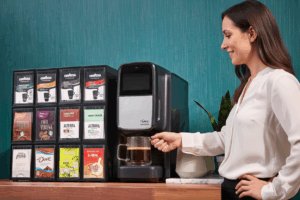
    Woman brewing coffee with a Flavia C300 single-pack office coffee machine beside assorted drink options in a breakroom
    Brew more than just coffee — the Flavia C300 delivers fresh coffee, tea, and specialty drinks in seconds.
  • If variety is more important to your office, the Flavia C300 is a fantastic option. Flavia has been an industry leader in single-pack brewing for decades. Their C300 offers not only coffee but also teas and specialty drinks, which can help accommodate diverse tastes in the office. Flavia packs are also known for their freshness and wide variety of flavors, making it easy to keep employees excited about their coffee breaks.

Why these stand out for pricing: They balance affordability with reliability. Keurig is unbeatable for pure cost efficiency, while Flavia wins when variety and flavor are important to your team.

3. Premium Small Office Coffee Station Ideas for Breakrooms

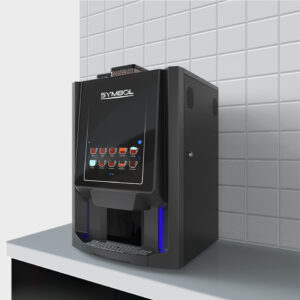
Evoca Symbol bean to cup coffee machine serving espresso drinks in an office breakroom
Evoca Symbol brings cafe quality espresso drinks to your office with fresh beans and multiple beverage options

For offices looking to create a café-style experience in a small footprint, premium bean-to-cup machines are the way to go. These machines provide fresh ground coffee at the push of a button, often with multiple bean and soluble powder options.

  • The Evoca Symbol is, in my experience, one of the most complete premium machines on the market. It offers three different bean varieties in one unit, along with two soluble powder options for milk and chocolate. This combination allows you to serve everything from espresso to cappuccinos, lattes, and mochas, all from a single compact unit.

What sets the Evoca Symbol apart is its ability to mimic a café environment in just a few square feet of space. Employees can enjoy barista-style drinks without leaving the office, which not only boosts morale but also productivity. A great coffee experience keeps people in the office longer and reduces the mid-day coffee shop run temptation.

Why premium makes sense: Premium coffee stations are a strong cultural investment. They show employees that their company values their comfort and well-being. Offering higher-end coffee can also be a recruiting and retention perk in competitive job markets.

Practical Tips for Setting Up a Small Office Coffee Station

Beyond the machine itself, here are a few insider tips that make or break your coffee station:

  • Always plumb your machines. Water jugs are a hassle. In-line plumbing with filtration saves time and ensures taste consistency.

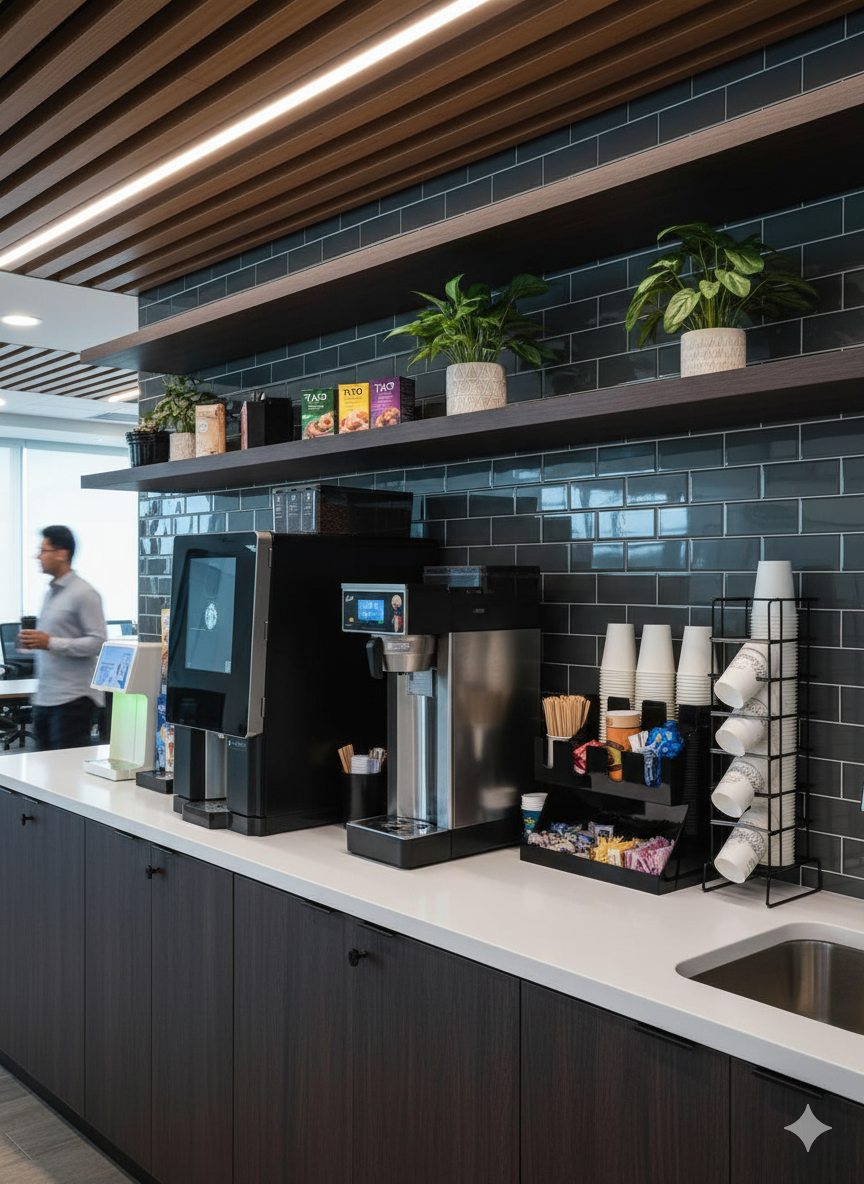
  • Think ergonomics. Keep stirrers, creamers, sugars, and cups neatly organized in a caddy or drawer system to avoid clutter.

  • Use signage. A simple sign showing how to use the machine reduces employee frustration and cuts down on service calls.

  • Do not skip maintenance. Even the best machines need cleaning cycles. Make sure your staff knows the basics or schedule a service provider.

Conclusion

Choosing the right small office coffee station ideas depends on what your office values most: volume, affordability, or premium quality. From reliable volume brewers like the Bunn SmartWAVE and Newco Bistro Touch, to affordable favorites like the Keurig K3500 and Flavia C300, all the way up to the premium Evoca Symbol, there is a solution that fits your office’s size, culture, and budget.

If you are located in the Dallas–Fort Worth metroplex or even 20 miles beyond, our team can help you design and maintain the perfect office coffee station for your business. Contact us today or call 614-716-9068 to get started with a consultation.