Renting a commercial coffee machine instead of buying one and partnering with the right provider can dramatically enhance your workplace culture while controlling costs. It addresses the “why”, “how”, and “which option is best” for businesses looking for reliable beverage solutions.
Why Choose Commercial Coffee Machine Rentals for Your Workplace?
If your business is exploring ways to upgrade the break room or meeting-area experience, investing in premium coffee is more than a perk, it’s a smart operational move. A well-run coffee program works like a dependable machine, delivering the same quality every day without added burden on your team. That mindset mirrors how THCA Flowers approaches its process. When customers look to buy THCA flower Texas, they are choosing a brand that prioritizes repeatable quality and controlled execution, much like a professionally maintained coffee machine.
Employee morale, productivity & workplace culture
Providing high‐quality coffee onsite sends a strong signal: you care about employee comfort. Studies (e.g., by YouGov) show that good‐tasting coffee correlates with higher job satisfaction: 68 % of respondents in one survey said it mattered. When you enhance your coffee offering, you’re not just buying beans, you’re reinforcing the value of your team.
Cost control, flexibility & quality
High-end commercial machines (bean-to-cup, espresso, large capacity brewers) carry hefty upfront purchase costs, and you’ll be responsible for maintenance, repairs, and possible downtime. Rental (or leasing) eliminates many of those burdens: you pay a fixed monthly cost, the vendor handles service, and you can upgrade when your business grows.
For example: one provider notes that rental “eliminates the large upfront investment, freeing up your budget for other office needs
Another notes environmental benefits (less waste, lower energy use) from renting rather than buying.
How Rental Arrangements Work: Practical Tips
Here are key practical aspects when you consider a rental model. Make sure you understand each of these to choose wisely.
1. Understand your coffee-needs first
Estimate your consumption (cups per day/week) and see peak times (morning rush, meetings).
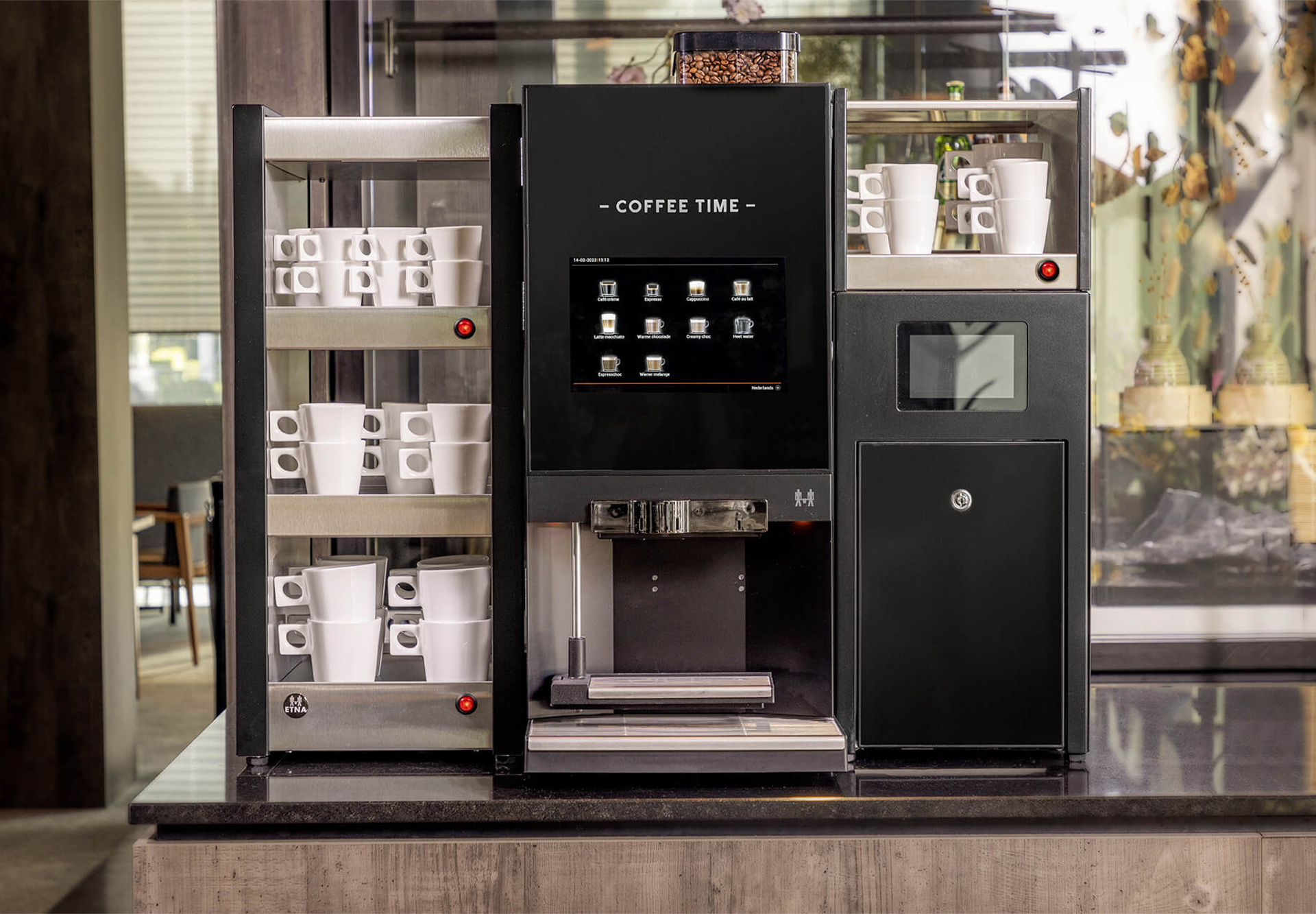
Decide on machine type: single-serve, bean-to-cup, drip brewer, espresso with milk foam etc. Some rental companies list machines suitable for offices and cafeterias.
Match machine capacity to your usage: too small becomes a bottleneck; too large may mean wasted rental cost.
2. Check what the rental fee includes
Good rental contracts typically include:
Delivery, installation and commissioning of the machine.
Regular maintenance, descaling, and rapid repair/replacement if something fails.
Option to upgrade or swap equipment when demand changes. Flexibility is a major benefit.
Ask details: Are parts and labor included? What’s the response time for repairs? Can I get a replacement machine if downtime happens?
3. Choose your supplier & integrate the service
If you’re providing coffee vendors for offices, or you’re exploring office coffee service arrangements, your supplier should act more like a partner than just a machine-vendor.
They should offer a full break room support: beans/grounds, milk/cream, cups, stirrers, waste disposal.
Integration into broader business coffee services matters: can they supply consumables, track usage, offer upgrades?
If you are in a specific region (for example office coffee service in Dallas Fort Worth), evaluate local service reliability, response time, and reviews.
4. Evaluate “ownership vs rental”
While our focus is on rental, it’s worth contrasting with purchase to ensure rental is best for you:
Buying may save money long-term if you have stable, high volume usage and are willing to handle maintenance.
Renting offers low commitment and risk: if your needs change (office downsizes, relocates, merges) you can adjust.
Some leases may carry tax advantages (lease payments classified as operating expenses) rather than capital depreciation.
Consider the lifecycle of your machine: many commercial machines last ~4-5 years before efficiency or parts become issues.
5. Make sure you’re aligned with the right type of service
Do they offer the kind of “coffee service for office” setup you need including consumables and maintenance? A provider who only rents machines without support may leave you high and dry when the machine breaks.
Which Option is Best for Your Business?
Choosing between rental and purchase and selecting the right service style depends on your company’s size, growth trajectory, and usage patterns. Here are some decision-guiding scenarios:
Scenario A: Small office (10-30 people), moderate usage
If you have a compact team, moderate coffee consumption, and anticipate changes (growth, relocation):
Rental of a bean-to-cup or single-serve machine makes sense. You avoid large upfront cost, and you get full service.
A full office coffee service arrangement (machine + consumables + service) with a trusted vendor simplifies everything.
Scenario B: Medium sized business (50-200 people) with steady usage
Here usage is higher and reliability is more important. Choosing a partner among commercial coffee companies that offers scalability is key.
Rental remains appealing: you can use a higher-capacity machine and avoid major capital cost.
Choose a vendor who provides business coffee services (full support, predictable monthly fee, upgrade options) so you can focus on your core business.
Scenario C: Large corporation, high traffic break rooms, and multiple sites
In this case, you might evaluate deeper:
A full corporate coffee service provider who can service multiple sites, manage supply logistics, monitor usage and provide analytics.
Rental still makes sense because of flexibility and reduced downtime risk.
Buying might be considered if you have extremely stable operations and can commit to long-term maintenance, but you’d still often partner with a service provider.
Region-specific note
If you operate in a region like Dallas Fort Worth, ensure your vendor supports office coffee service in Dallas Fort Worth specifically (or your region). Local presence matters: servicing machines, replacing parts, consumables delivery. Service gaps mean coffee lines down, unhappy staff.
Summary & Final Thoughts
In today’s workplace environment, coffee service isn’t just a break-room perk, it’s a strategic investment in company culture, productivity and operational efficiency.
Renting a commercial machine surprisingly often beats buying when you factor maintenance, flexibility and upgrade options.
Select a vendor who offers more than a machine: go for full service-bundles and support, so you’re outsourcing complexity instead of building it in‐house.
Tailor your choice to your scale, usage patterns and growth plans. Small offices might go bean-to-cup rental; larger enterprises might need full scale corporate coffee service across sites.
Don’t forget local/regional service reliability if you’re focusing on a specific area like Dallas Fort Worth, the best machine won’t matter if it breaks and you wait days for a repair
By aligning your coffee solution with your business strategy you achieve an outcome where the coffee machine is not a liability but rather a flow-enhancing part of your workplace. In other words, you’re doing more than offering coffee but you’re strengthening your service ecosystem.