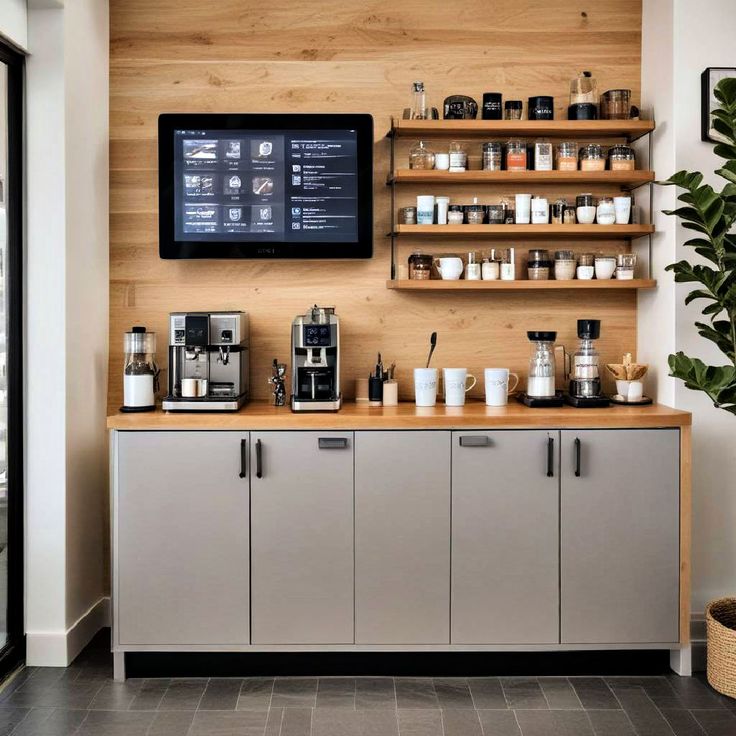
What is the Top Coffee Maker for Office Breakrooms?
If you want great taste, low hassle, and predictable cost, choose a bean-to-cup super-automatic with a plumbed water line and thermal carafe option. It brews fresh for every cup, handles milk drinks, and scales from 20–150 people with minimal training.
Which Option is Best?
-
Best overall: Bean-to-cup super-automatic (fresh beans, push-button drinks, low waste).
-
Runner-up for big crews & meetings: Commercial batch brewer with thermal airpots.
-
Budget/low-volume choice: Single-serve pod system (simple, but higher per-cup cost and more waste).
-
Specialty upgrade: Cold brew keg or concentrate for hot climates and afternoon slumps.
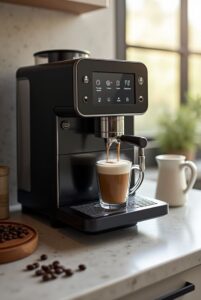
Why This Pick Works (Taste, Speed, Cost, and Morale)
-
Taste: Whole beans ground on demand beat pre-ground/pod flavor by a mile. Consistency is locked in with programmable recipes.
-
Speed: 20–45 seconds per drink covers peak rushes; queue moves fast without barista skills.
-
Cost control: Typical all-in ranges $0.25–$0.55 per cup with beans and cleaning supplies, vs $0.60–$1.20 for pods.
-
Morale & retention: Espresso-style options (latte, cappuccino, americano) feel like a perk; fewer “coffee runs” offsite.
-
Waste & cleanup: Spent pucks are compostable in many municipalities; no plastic pods to toss.
Which Option is Best for Different Team Sizes?
-
10–30 people: One bean-to-cup with a small hopper (1–1.5 lb), internal water tank or plumbed line, plus a backup thermal carafe for meetings.
-
30–80 people: One higher-capacity bean-to-cup (2+ grinders) plus a commercial batch brewer with 2–3 thermal airpots for the morning surge.
-
80–150 people: Two bean-to-cup units side-by-side for redundancy and a batch brewer; add a cold-brew keg if afternoon traffic is heavy.
-
Distributed floors: One unit per floor beats one giant machine downstairs; proximity matters more than pure output.
How To Choose in 7 Minutes
-
Water: Plumbed > pour-over (speed, taste, fewer spills).
-
Grinders: Dual hoppers let you offer regular + decaf or espresso + medium roast.
-
Milk: If you need lattes, pick a model with an auto-steam milk system and refrigerated milk line.
-
Power: Standard 120V works for most; confirm dedicated circuit for reliability.
-
Cleaning: Daily 3–6 minutes + weekly deep clean; choose machines with guided prompts.
-
Telemetry: Remote alerts for low beans/milk cut downtime.
-
Service: 4-hour on-site SLA beats specs on paper.
How To Size Your Machine (Simple Math You Can Use)
-
Peak rule: Plan for 1 drink per person in the busiest 30 minutes.
-
If your rush is 40 people in 30 minutes, you need ≥80 drinks/hour capacity. Many bean-to-cups deliver 80–120 drinks/hour depending on beverage mix.
-
Bean hopper math: A 2-lb hopper yields ~90–110 espresso-based drinks (dose 8–10g). If you empty it before lunch, add a second hopper or daily refill routine.
-
Milk throughput: Lattes/flat whites strain milk systems; if milk drinks exceed 60% of orders, favor models with external milk fridges to keep temps stable.
Practical Tips Competitors Miss
-
Taste mapping: Run a 1-week A/B roast test. Day 1–3 medium roast; Day 4–6 medium-dark. Post a QR poll. Adoption jumps when staff feel heard.
-
Water first, coffee second: A carbon block + scale inhibitor filter improves taste more than upgrading beans one tier. Replace at 6–9 months or 5,000–10,000 cups.
-
Noise & placement: Under 65 dB keeps the finance pod happy. Avoid echoey corners; add a soft mat to damp grinder noise.
-
ADA and flow: Leave 36″ clearance front and side; place the machine outside meeting rooms to prevent bottlenecks before calls.
-
Waste streams: Provide a grounds bin with compostable liner and a milk rinse catcher; label clearly. Less mess, fewer janitorial tickets.
-
Downtime playbook: Keep a backup airpot brewer in the supply closet. When tech service is en route, you’re still pouring.
Which Features Matter (And Which Don’t)
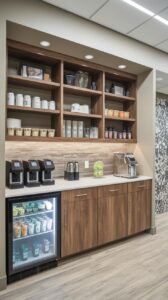
Must-haves
-
Dual grinder hoppers (regular + decaf or espresso + house).
-
Plumbed line with filter head; bypass valve for swap-outs.
-
Auto-rinsing milk circuit and guided cleaning prompts.
-
Telemetry/IoT for low-product alerts and fault codes.
-
Thermal carafe compatibility for meetings without burnt-plate taste.
Nice-to-haves
-
Touchscreen with favorites (speeds lines).
-
Cup sensor to prevent drips when someone pulls early.
-
Custom drink limits (cap 12-oz lattes if milk is a cost driver).
Skip-ables
-
Overly fancy latte art modes (fun demo, no ROI).
-
Plumbed-in syrup systems (sticky cleanup; bottled syrups by the machine are fine).
How To Roll It Out (Change Management in 2 Weeks)
Week 1: Pilot + calibrate
-
Install with filter and dedicated outlet; run 3–4 water rinses.
-
Dial-in grind and recipe: 1:2 espresso ratio, 20–30 seconds.
-
Invite floor reps for a 15-minute taste session; lock recipes after feedback.
-
Post a one-page “Quick Drinks Guide” by the machine.
Week 2: Launch + measure
-
Announce on Slack/Teams with 3 drink suggestions and a 7-day poll.
-
Track cups/day via telemetry; aim for 60–80% staff adoption by week’s end.
-
Adjust bean order cadence and cleaning rota from real numbers.
When a Batch Brewer Wins
Choose a commercial batch brewer with thermal airpots when:
-
You host frequent town halls or trainings needing 40–80 cups at once.
-
Your culture is “grab a mug and go” with minimal milk drinks.
-
Facilities prefer ultra-simple cleaning (rinse baskets, swap filters).
Pro tip: Pair with a grinder that doses by weight, not time, for reliable extraction.
Budget Path: Pods Without Regret
-
Use pods when electrical or plumbing upgrades aren’t feasible yet.
-
Contain costs by:
-
Limiting SKUs to 3–4 crowd-pleasers.
-
Adding a recycling box for spent pods.
-
Deploying a small thermal brewer for meetings so pods don’t cover bulk demand.
-
Final Recommendation
-
Pick a bean-to-cup super-automatic with dual grinders, milk fridge, plumbed water, and telemetry.
-
Back it up with a thermal batch brewer for big meetings.
-
Lock in quality with filtration, simple cleaning rituals, and a 4-hour service SLA.
-
Drive adoption with a 2-week rollout, roast A/B test, and a QR feedback loop.
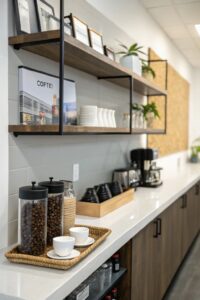
Quick Checklist
- Plumbed water + filter installed
- Dual hoppers (house + decaf)
- Milk fridge, auto-rinse, daily clean plan
- Telemetry connected and alerts tested
- Thermal brewer + two airpots in storage
- One-page drink guide posted
- QR poll live; beans reorder threshold set
With this setup, your team gets café-level drinks without the chaos, your facilities team gets an easy routine, and your finance team gets predictable costs, exactly what you want from the top coffee maker for office breakrooms.